
Neo Travel Blog · Bird Watching and Photography Expedition · September 17–29, 2026
Some birds are found. Others are waited for. Others simply appear.
That is how the field notebook we gave our group began, the day they arrived in Costa Rica. Thirteen days later, as they closed the notebook, the final count left them speechless: 234 bird species identified.
Daniel was in charge of keeping the notes. After dinner he would look up the exact names his app required to log each sighting, some nights until very late, and at breakfast he shared his work with the group. Over breakfast, they fired each other up to collect even more memories.
But if you ask us what was most valuable about this expedition, we won’t start with the number. We will start with the people: the guide waiting for us before dawn, the family who opened the doors of their property, the boat captain who knows every bend of his waters like the palm of his hand. Because at Neo Travel we believe a bird list is written with cameras, microphones and binoculars, of course, but a memory is written with human connections.
A Journey of Forests, Wetlands, Mountains and Coasts
Our group, who came from the dehesas of Extremadura, traveled through very different regions, and each one contributed its own chorus:
Tortuguero. The forest that lives between the water and the Caribbean. We navigated the secondary canals by boat, with the calm that bird photography demands: engine off, ears alert, patience. There we were accompanied by Owen, Neo Travel’s representative in Tortuguero, who handled the tours with excellence, dedication and mystique. The transfers were in the hands of Miguel, known in Tortuguero as “Circuito,” who turned them into one more opportunity to discover the region and its birds, not only through photography but on a human level, through his passion.
La Hoja Birding Spot, beside the Costa Rica River. When we left Tortuguero we made a stop that has become part of the heart of this trip. At La Hoja we were welcomed by Omar, the owner, who accompanied us throughout the visit, and his father took us to see sloths. We had lunch on the balcony overlooking the river, among birds and good conversation. Itis stops like this, with a host who opens his home and his family to us, that make the difference at Neo Travel.
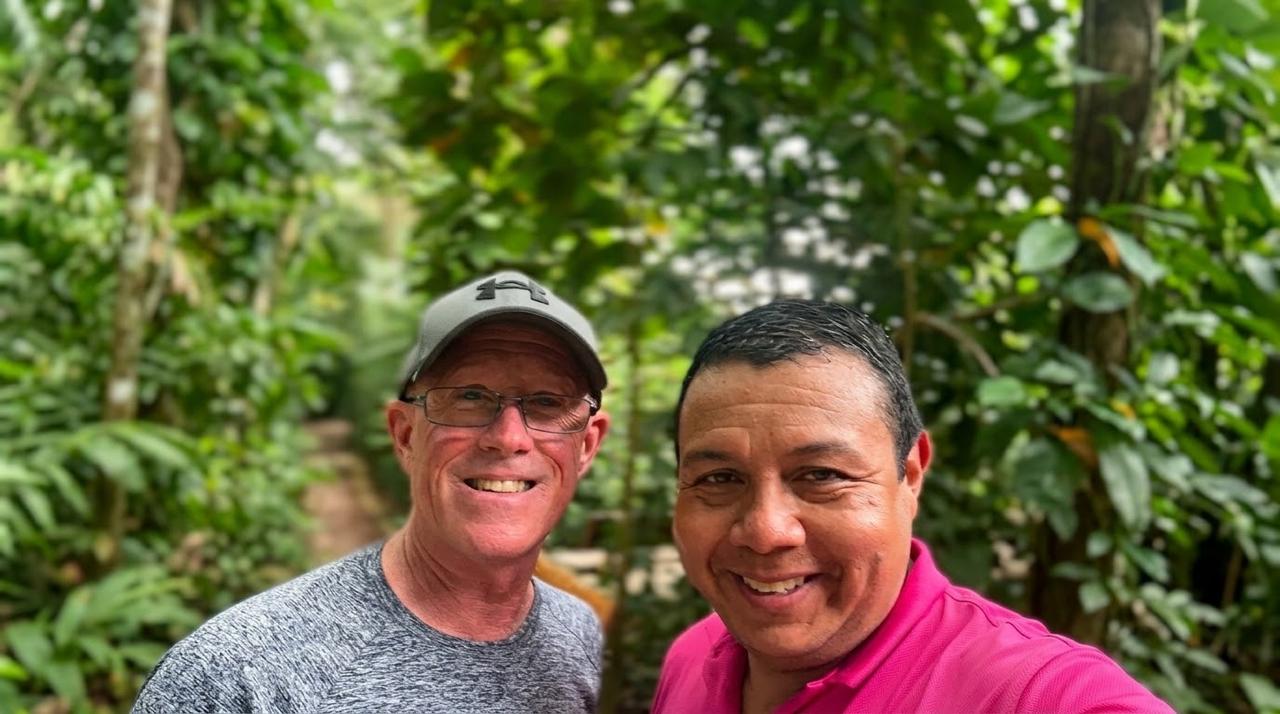
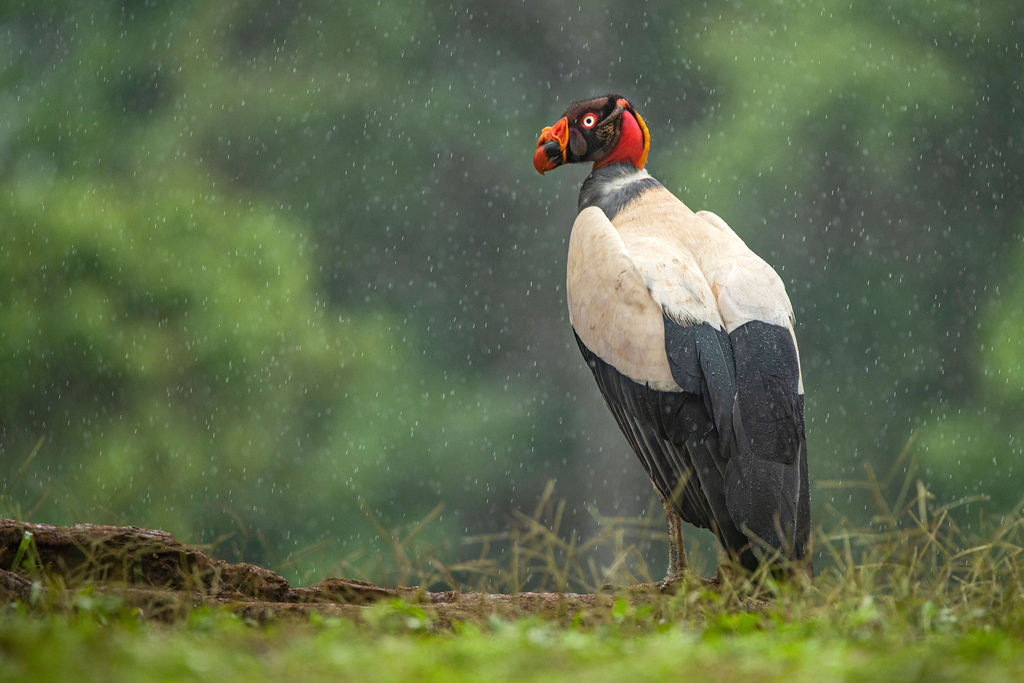
Pierella and Sarapiquí. Where the lowland rainforest begins to reveal its secrets. Two nights of trails, a night walk and an early outing in search of the majestic King Vulture. It was a real shame the day didn’t have more hours to share with Cristal, always so full of energy and so helpful; and of course, with William, the one who took the first step and drove us in his Land Rover, which the group nicknamed “Juan Robert,” to that magnificent experience of seeing the ever-imposing King Vulture. An experience that would surprise us with a detail we will share later in this blog.
Isla Agamí, on the way to La Fortuna de San Carlos. When we left Sarapiquí we took a detour to bring the group to Isla Agamí in search of the mysterious Agami Heron. They wanted to see it, really wanted to, and we did see it. There we were welcomed by Odir, owner of the project, who explained his vision and accompanied us throughout the tour. At the end he opened some fresh coconuts so we could enjoy that refreshing and truly beneficial water. This is the closeness we look for: the host, the guide and the owner are the same person.
La Fortuna de San Carlos, with Huber. The greatest value of this visit was Huber and his life story. He worked in agriculture from the age of 12, and the abuse of chemical products on his plantations brought him a death sentence. That changed his outlook on life, the way he cares for his family and how he understands nature as creation. Today his properties are 100% chemical-free: he made his dream a reality, and all of his children work with him on the same project. The enormous number of frogs and snakes we observed turned out to be the dessert; the most important thing was getting to know him.
Caño Negro and Medio Queso. Wetlands, lagoons and mirrors of water where the great hunters let themselves be seen. An open landscape, ideal for anyone who wants to adjust the telephoto lens and enjoy. Two great local figures welcomed us: the committed and passionate Renato, for the tour of Caño Negro itself, where these lucky photographers didn’t want to leave, but had great motivation to move on to the next stage, the visit to the Medio Queso wetland with none other than the famous Chambito. That day, quite literally, necks and fingers ached from the enormous number of images captured.
Tárcoles and Carara. The meeting of dry forest, mangrove and tropical rainforest. Observation tower, trails and a boat ride on the Tárcoles River. One of the activities that left the biggest mark on the group was the walk from Tárcoles Birding Lodge to the marsh, where, besides birds, we found reptiles and a large family of coatis that thrilled everyone. But who are we kidding? The massive number of macaws in the gardens of Tárcoles Birding Lodge was something unforgettable for our dear guests.
Los Santos and San Gerardo de Dota. We got up early, with hot coffee in hand, to climb into the cloud forest where the quetzal lives. Some early mornings are appreciated for a lifetime. In the Los Santos area we were accompanied by Erick, whom two of the participants already knew from FIO 2026, where he was with Neo Travel. His commitment to protecting the quetzal and other birds is truly contagious. Saying you saw a quetzal can sound like a light thing, but the environment Erick and his family have worked to build takes this experience far beyond that! Erick gave them a multi-flash workshop at his property, Gema del Bosque, and they were amazed and, of course, grateful. And let’s not forget lunch at Doña Miriam’s, where they got impressive shots and also ran into fellow countrymen, to whom they shared the story of everything they had lived until that day, and of course took the chance to plant a little envy back home, even from far away.
Mirador El Patio, Coronado. When we left San José for Cinchona we wanted to close with a flourish, so we stopped at Mirador El Patio. There we were welcomed by Mario “el Chino” Wong, a renowned nature photographer in Costa Rica, together with his sister, the owner of the restaurant. For a group of photographers, sharing time with a colleague of that caliber was a hard finish to top. The setup for the photos, the weather, the fruit they had prepared for us, absolutely everything came together for a successful visit. Yet once again, that warmth of the Costa Rican heart made the difference: a heartfelt “thank you, Mario, thank you, Irene” came out of every throat, with a slight catch in the voice and the promise to return for dinner, and for the view that will always be waiting for them with open arms.
Cinchona and La Paz. To say goodbye, the small winged treasures of the cloud forest, among feeding gardens and ravines covered in green. The waterfalls around this site showed themselves shyly through the mist of a cloud forest in the middle of the rainy season of this beautiful tropical country, and it was there that Daniel confirmed the final number of species: 234, most of them lifers, or as they say in Spain, bimbos. Coming back for more was the obligatory topic of conversation on the road down to the airport.
What Makes Us Different
Costa Rica has no shortage of good birding routes. We are known worldwide for it. What we want to offer is something else: real closeness.
- Personalized attention from start to finish. Groups designed to fit each traveler, with a photographer’s rhythm and not a clock’s. We know how important it is for every participant to reach their goal, for their images to be sharp and worthy of competitions. That’s why, rather than rushing to fill itineraries, we make the effort to learn each participant’s objectives in advance.
- Lodging and sites with a face. We choose places where we personally know who welcomes us, who cooks and who looks after the forest we are going to explore. Many of them are directly linked to Neo Travel, and our guests feel it: they are treated as one more member of the family, not as a cold ticket number arriving at a site.
- Projects we visit and support. Every step of the itinerary is also a way of supporting those who protect these ecosystems and live from them responsibly.
- We have known Pierella since it was a small pasture; today it is an island of refuge in the middle of cattle fields, banana farms and pineapple plantations.
- We work with Paraíso Orgánico while it is still a project whose owners, not hired staff, welcome the visitors, a patch of land bordering the Children’s Eternal Rainforest.
- We saw Tárcoles Birding Lodge being born before it existed. Federico told us what was coming, and for me it is a pearl of the Central Pacific, with a hard choice between the view of the sea and the enormous number of birds.
- Gema del Bosque is a true ally. It is a pride to support such a personalized family project, with customer service that today’s hoteliers should imitate, but above all, what weighs most for me as a biologist is the immense environmental impact they have come to build and set flowing in the community.
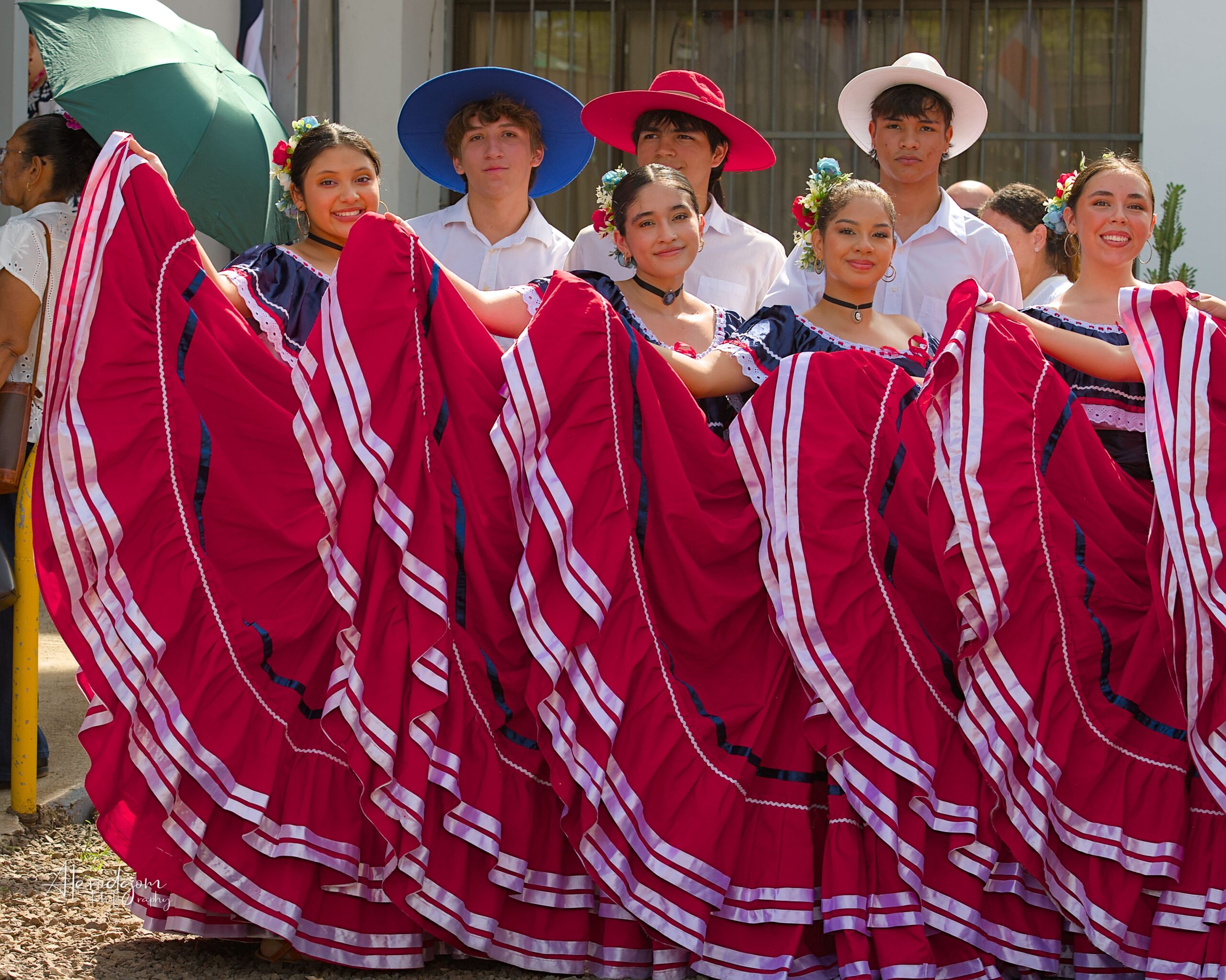
- Costa Rica told from the inside. Fewer chain hotels, more farms, more sobremesa (lingering at the table), more Costa Rican heart.
Because we believe, as our signature says, that traveling can also be a way to conserve.
The Field Notebook: A Way of Looking Slowly
For this expedition we prepared a field notebook, in order to learn each participant’s personal interests before the trip. We also sent educational material well in advance so they could study the species they would be enjoying weeks later in our little paradise.
In this book they had information on the species by region and observation site, with space to mark the photographs achieved and the observer’s notes. It is not a promise of sightings (nature doesn’t sign contracts), but an invitation to look more slowly, listen carefully and discover what normally goes unnoticed.
By the end of the trip, those pages were no longer a guide: they were a shared memory.
A Memory to Tell
The Agami Heron doesn’t let itself be seen easily, and that day neither the hour nor the date was in our favor: it was the end of the peak season. Even so, Isla Agamí surprised us. We saw many juveniles, truly many, and a couple of participants are taking home good photographs of an adult. Moments like this, when effort and the right host come together, explain why we do what we do.
Another truly memorable moment came on the day we went in search of the King Vulture. Together with William we noticed unusual behavior in the birds: they came close but did not descend to the perches as they usually do. We applied what the scientific method teaches us, question after question, to try to understand what was happening. The cause, I can tell you, was very good news.
What was it? The ocelot, or manigordo (Leopardus pardalis), is now a regular member of the community on the lands William protects, and that day, on the observation platform, we found droppings of this beautiful and rare animal, a word Daniel would use often on this trip for his lists.
We changed strategy and captured images that will never fade from the minds of Pepe, Juani, JJ, JB and, of course, the group’s secretary, Dani.
Would You Like to Live It?
If you are passionate about birds, about nature photography, or simply want to discover a more authentic and closer Costa Rica, write to us. We design tailor-made expeditions for groups and independent travelers.
Neo Travel · Costa Rica Traveling can also be a way to conserve.